
Salmonella Outbreaks Keep Happening—Here’s What Poultry Pathogen Control Can Do Differently (Copy)
Salmonella continues to drive outbreak investigations in the United States, and it’s not limited to one category of food. The CDC regularly posts and updates foodborne outbreak investigations—an ongoing reminder that prevention must be continuous, not reactive. CDC
Even when outbreaks involve non-poultry foods, the lesson for poultry is the same: one weak link in the chain can trigger illnesses, brand damage, and costly responses.
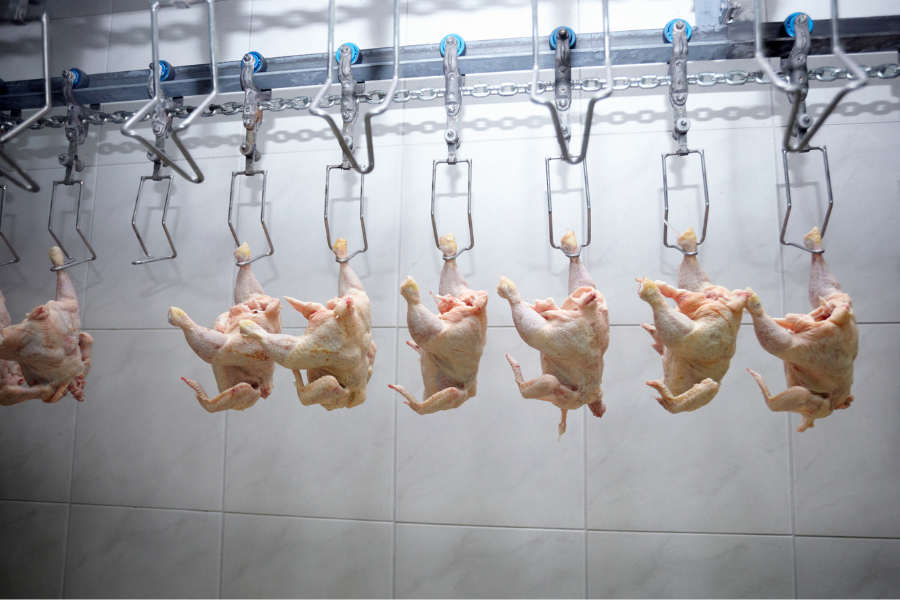
Poultry remains a persistent Salmonella reservoir
One of the clearest signals of ongoing Salmonella risk is repeated outbreak activity associated with backyard poultry, where contact with live birds can lead to infections across multiple states. CDC
Backyard poultry isn’t the same as commercial broiler production—but it highlights a reality that the entire industry already knows: birds can carry Salmonella without obvious signs, and exposure pathways can be surprisingly easy.
The cost of “reactive” food safety
When companies are forced into reaction mode, the downstream impacts can include:
Production disruption
Investigations and intensified sampling
Public alerts or recalls (when applicable)
Customer and consumer trust damage
Long-term commercial impact
The best programs aim to reduce the likelihood of reaching that point by making Salmonella control predictable and measurable.
Why regulators and stakeholders keep revisiting Salmonella in poultry
In late 2025 and early 2026, FSIS continued convening discussions and publishing notices aimed at identifying practical strategies to reduce Salmonella illnesses attributed to poultry products. FSIS
Regardless of where policy lands, the direction is consistent: more attention, more scrutiny, and more pressure for demonstrable control.
The “layered controls” mindset
Best-in-class pathogen control uses multiple hurdles, for example:
Biosecurity and sanitation
Water management and litter programs
Processing antimicrobial steps
Monitoring, verification testing, and corrective actions
The more layered the program, the less likely any one failure becomes a crisis.
Where bacteriophages strengthen the stack
Bacteriophages are compelling because they add a layer that is:
Targeted (focused on Salmonella)
Flexible (can be applied pre-harvest and/or post-harvest depending on program design)
Compatible with modern risk-reduction programs
Phages don’t replace sanitation, process control, or testing. They reduce the probability that Salmonella persists when it’s present—helping lower the overall risk profile.
Looking to test our VAM-S Anti-Salmonella bacteriophages and map a Salmonella control plan around your operation’s highest-risk points? SK8 Biotech can help you evaluate where bacteriophages fit for broilers and processing—based on your targets and data.