
Bacteriophages for Salmonella in Poultry: How They Work (and Why They’re Different)
Salmonella remains one of the most persistent food safety challenges connected to poultry production—impacting growers, processors, brands, and consumers. Outbreak investigations continue to occur across the U.S., reminding the industry that pathogen control has to be proactive, layered, and measurable.
One tool gaining serious attention is bacteriophages (often shortened to “phages”). Phages are naturally occurring viruses that infect bacteria—and importantly, they only infect bacteria, not animals or people. That specificity is exactly why phages are being explored for modern Salmonella pathogen control in both live chicken (broilers) and poultry processing.
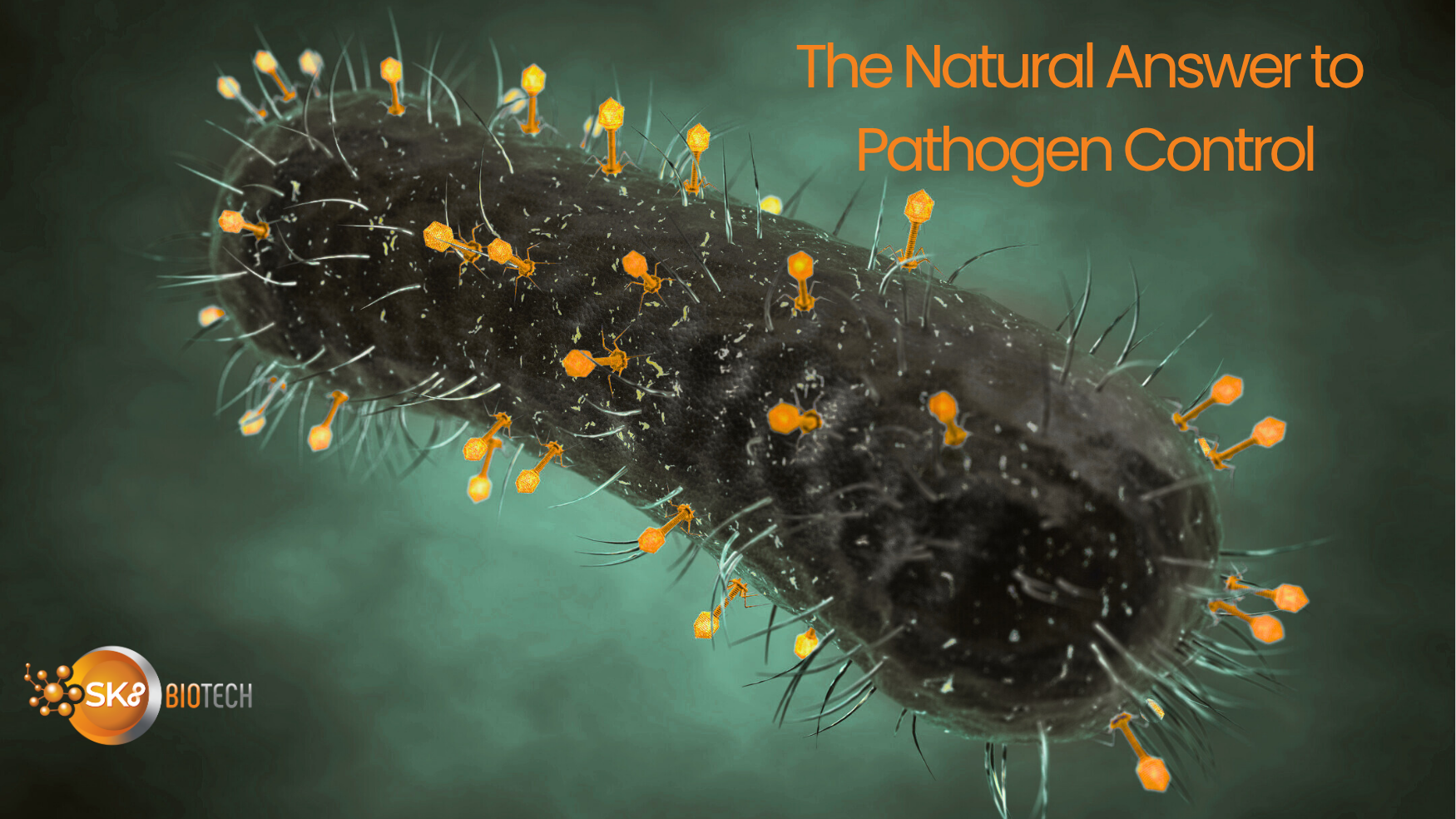
What are bacteriophages?
Bacteriophages are microscopic biological agents found widely in nature—wherever bacteria exist. Their job in the ecosystem is simple: identify a specific bacterial target, infect it, multiply inside it, and break it down.
In food safety terms, that means properly selected phages can be used as a precision tool to reduce Salmonella levels without broadly disrupting everything else in a system.
How phages target Salmonella (simple explanation)
Phages work like a “lock and key”:
Find the target: A phage recognizes a specific Salmonella surface structure.
Attach and inject: It attaches to the Salmonella cell and injects genetic material.
Replicate: It multiplies inside the Salmonella cell.
Lyse (break down): The Salmonella cell is destroyed, releasing new phages that can target additional Salmonella.
This is why phages are often described as self-amplifying when the target bacteria is present—more Salmonella can mean more opportunities for phages to work.
Why poultry leaders are looking at phages now
Salmonella risk is not theoretical. The U.S. continues to manage multi-state outbreaks tied to many foods, while poultry remains a major reservoir and a key focus area for prevention. See CDC current outbreaks
At the same time, regulators and stakeholders continue to debate and revisit strategies for reducing Salmonella illnesses attributed to poultry—highlighting the need for new, practical interventions the industry can execute. USDA searches for novel Salmonella reduction strategies.
Phages are increasingly viewed as a complement to existing controls because they can:
Target Salmonella with precision
Fit into layered programs (not “replace everything”)
Support goals around reduced contamination, fewer positives, and lower recall likelihood
Align with broader industry pushes toward antibiotic stewardship (phages are not antibiotics)
Where phages can fit in poultry systems
Phage-based solutions are being evaluated in two big zones:
1) Live poultry (pre-harvest)
Goal: reduce Salmonella colonization and shedding in broilers before they reach processing
Typical focus: drinking water delivery, program timing, and matching phages to farm Salmonella strains
2) Poultry processing (post-harvest)
Goal: reduce Salmonella on carcasses/parts and minimize cross-contamination risk
Typical focus: spray application, contact time, and integration at key intervention points
The key idea: better outcomes come from layered pathogen control
No single control solves Salmonella. The winning approach is layered—using multiple hurdles that work together.
Bacteriophages are one of the most promising “next layer” technologies because they offer targeted Salmonella reduction without being a blunt instrument.
If you’d like to explore how phages could fit your pathogen control program for broilers or processing, contact SK8 Biotech to discuss your Salmonella targets, intervention points, and success metrics.